Improving Welcome Reward Discovery for Higher Redemption Rates

Project Overview

Project

Welcome Reward redemption rates were low across membership merchants, indicating that new users were not aware of or redeeming their rewards effectively. This project focused on improving reward visibility to reduce friction in the checkout flow, thereby strengthening early customer loyalty.

My Role

Product Design Intern

Timeline

1 week

Platforms & Tools

Figma, StoreHub Beep Delivery

Impact

The redesign significantly improved engagement with membership rewards:

  • 450% increase in Welcome Reward Redemptions
  • 120% increase in reward discovery rate (2.2× more views of reward section)
01

Backstory

By mid-July, both data and merchant feedback revealed a recurring issue across StoreHub membership merchants: newly signed-up members were not redeeming their Welcome Rewards. Despite merchants were successfully acquiring new sign-ups, these users were not converting into early loyal customers, indicating activation was collapsing at the very first touchpoint of the loyalty funnel.

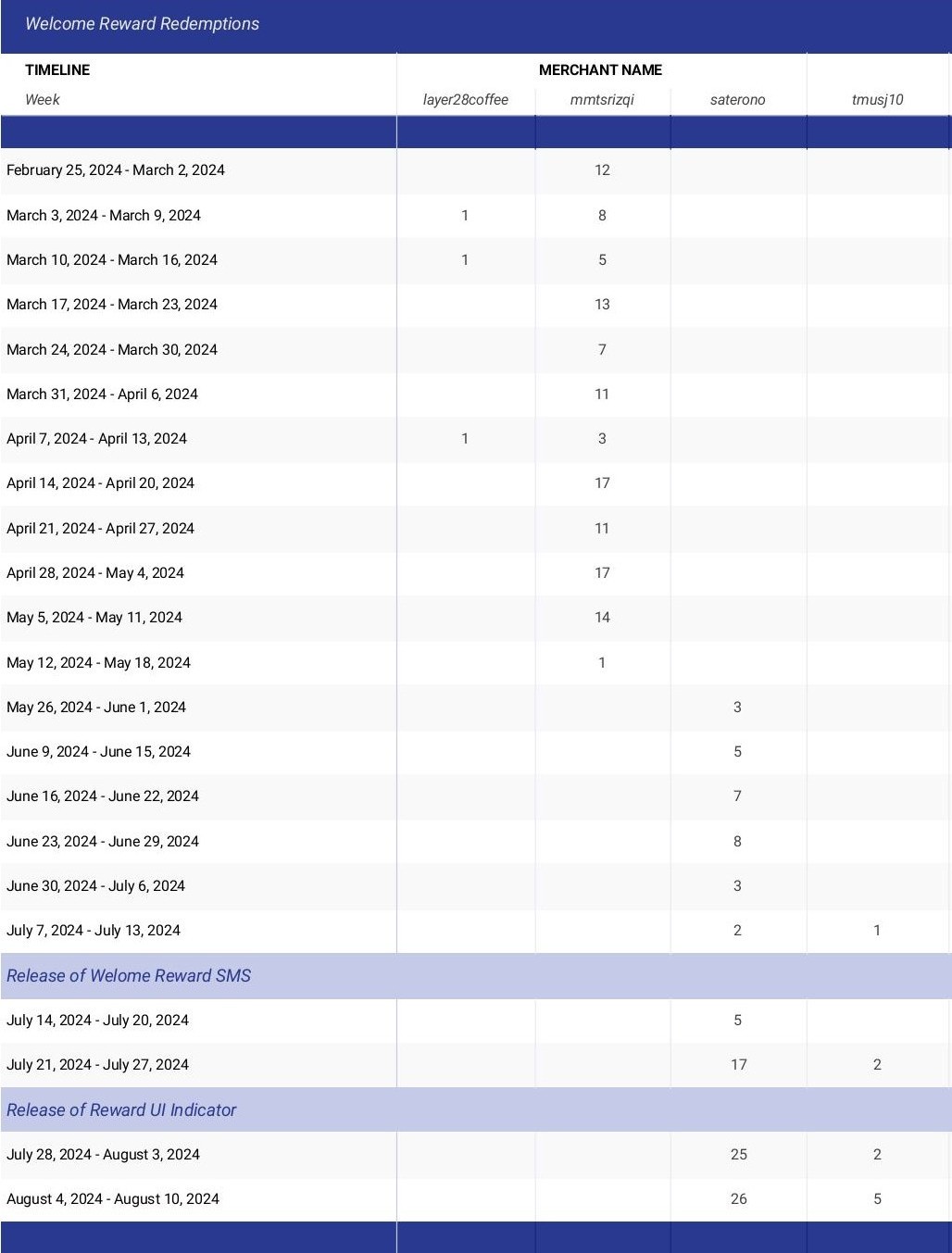
I reviewed the weekly redemption activity across several merchants to understand where the activation was breaking down.

The weekly redemption data exposed the inconsistency in actual Welcome Reward usage. Saterono, who raised the initial complaint, showed chronically low engagement before 17 July (3-8 redemptions per week) despite having 2,476 registered members.

This pattern revealed a critical friction point: newly joined members were receiving the Welcome Reward, but the platform was not helping them notice, access, or apply it.

02

Problem Statement

Newly joined members were not redeeming their Welcome Reward because the platform (Beep Delivery) did not adequately surface, signal, or guide users towards using it during check-out.

03

Design Direction & Strategy

Design Goal

This project focused on increasing the visibility and discoverability of available rewards within the check-out flow, especially the Welcome Reward, at the exact moment users are deciding whether to complete their order.

WHY This Matters?

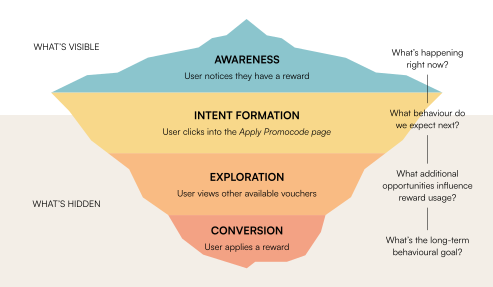
From the backstory insights, the core issue was not the reward itself, but the lack of timely, in-context cues that guide users from awareness → usage.

The essential user actions required for a successful redemption:
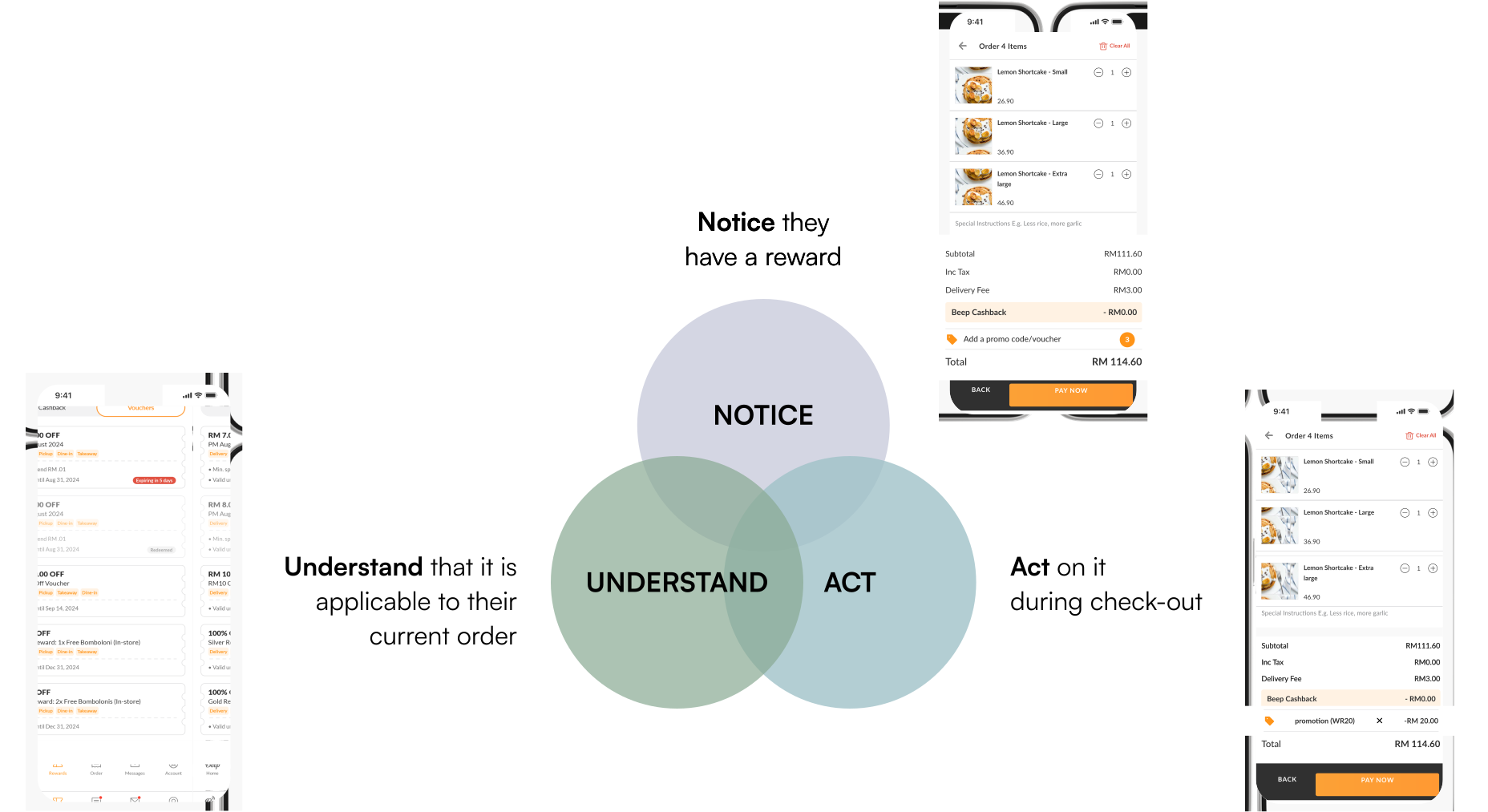
Users were consistently missing the reward because the current experience required them to manually open the voucher section without any hint that something valuable was waiting inside.

This created invisible friction that suppressed both redemption rates and early-stage customer activation.


Design Strategy

We followed a minimal-change, high-impact strategy instead of redesigning the entire checkout flow to avoid unnecessary disruption to the existing check-out experience.

1. Surface Rewards Contextually at the Moment of Purchase

We introduced a subtle but high-visibility indicator that alerts users whenever they have an available:

This ensures timely awareness without adding cognitive load or interrupting the flow.

2. Preserve Existing Check-Out Mechanics

To minimise engineering lift and avoid disrupting merchant operations, the solution did not modify:

The approach enhances the user experience without touching core systems.

3. Encourage Exploration of Other Rewards

Beyond improving Welcome Reward redemptions, the indicator was intentionally designed to shape healthier reward behaviours:

  • Increase visits to the Apply Promocode page.
  • Surface additional rewards users may not be aware of
  • Establish early patterns of reward engagement

This creates a long-term uplift in building customer loyalty and repeat activation, not just a one-time spike.

04

Final Solution

Design Outcome

Click here to view the interactive animation of the reward visual indicator.

What This SOLVES?


Design Iteration

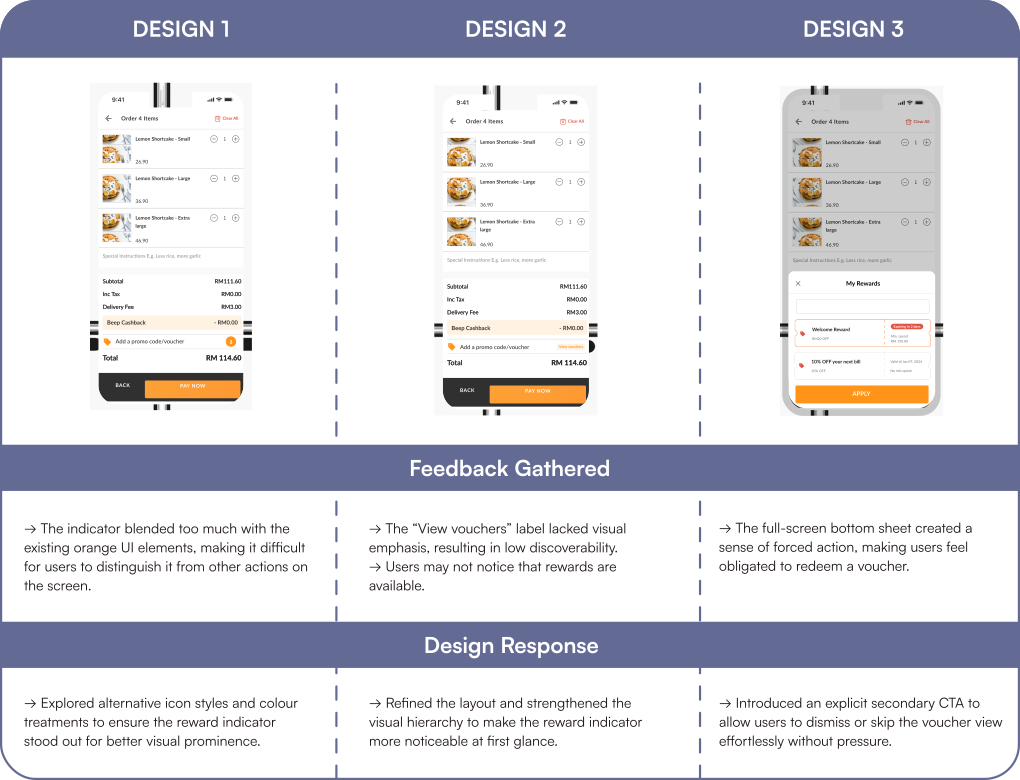
I iterated through multiple design concepts to test how different visual cues could influence reward discovery and user behaviour, before arriving at the final solution that best balanced clarity, usability, and impact.

These explorations were reviewed through multiple discussions with PMs and CTO to evaluate feasibility and identify the most ideal approach.

05

Results & Impact

The solution significantly improved early-stage customer activation, resulting in a 450% increase in Welcome Reward redemptions and a 120% boost in reward discovery rate. These outcomes demonstrate that users became far more likely to notice, explore, and apply their available benefits.

06

What I Learned?

Work with Existing Design Systems

Working in a live product ecosystem taught me how to apply fixed colour tokens, spacing rules, and hierarchy principles to maintain consistency across a mature design system without compromising clarity or visibility.

Align Early with PMs & Engineering

This project exposed me to real agile delivery: grooming sessions, design-engineering alignment, and iterative reviews with PMs and CTO. I learned how important it is to communicate design intent clearly and co-create solutions that remain technical feasibility.

Design Small, Iterate Often

Not every improvement requires a major redesign. Small-scale, high-impact adjustments can be released gradually to drive measurable improvements while avoiding disruption to existing user flows.

Feedback Is a Tool, Not a Judgment

Design critiques became a core part of uncovering blind spots. Receiving critiques from senior leaders strengthened my ability to refine, justify, and evolve design decisions without taking feedback personally.